The Three Layers of Useful AI: Agents, MCP, and SKILL.md


You've heard "AI agent" a hundred times this year. Here's what it actually means—and why the new developments matter for your business.
The "AI Agent" Buzzword, Decoded
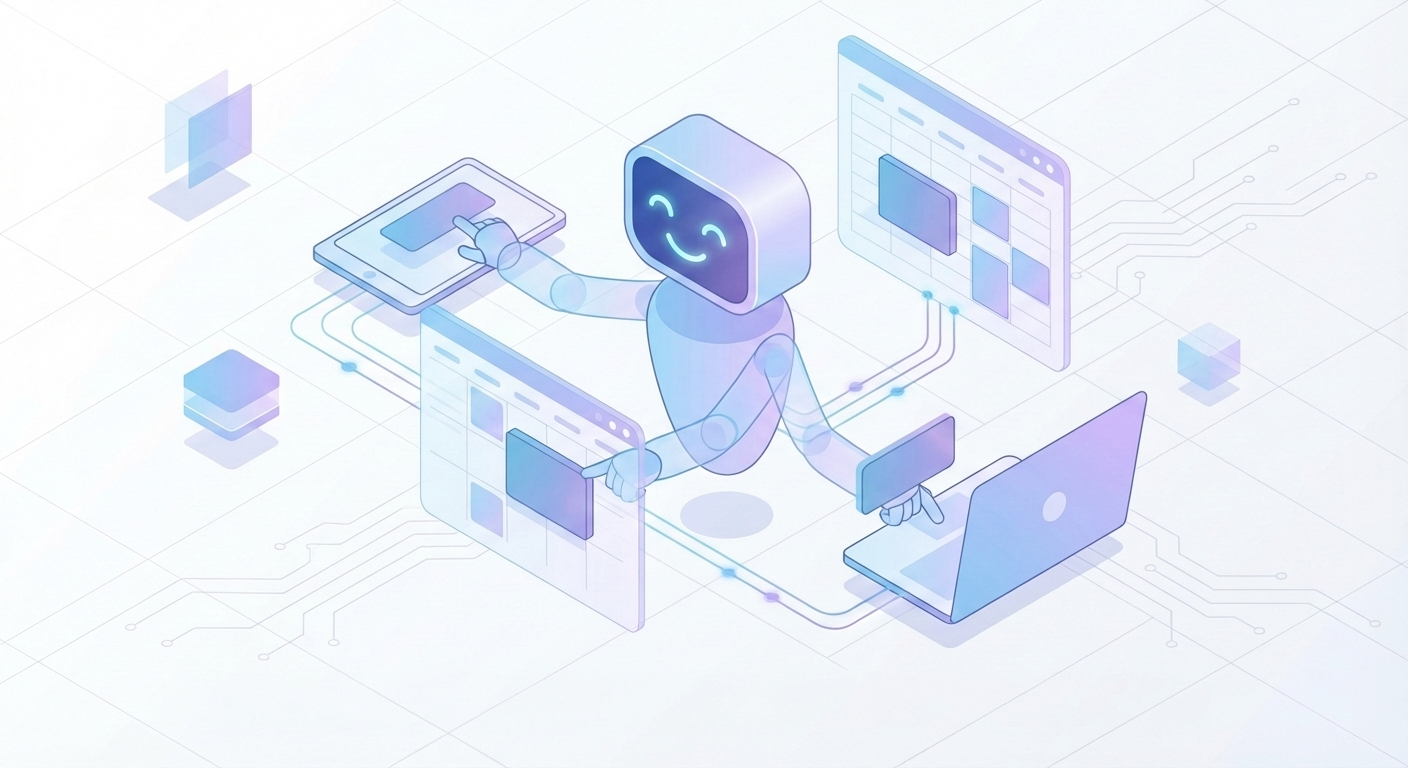
Let's cut through the noise.
An AI agent is simply an AI system that can do things, not just answer questions. While ChatGPT might tell you how to book a flight, an AI agent could actually book it for you—checking your calendar, comparing prices, and making the reservation.
Think of it this way:
- Traditional AI: A very smart advisor who can only talk
- AI Agent: A capable assistant who can talk and take action
The difference isn't intelligence—it's agency. The AI can use tools, access systems, and execute tasks on your behalf.
Why This Matters for Business
When AI can act (not just advise), the economics change dramatically:
- Before agents: AI drafts an email → Human reviews → Human sends → Human logs it in CRM
- With agents: AI drafts, sends, and logs—Human approves once
That's not incremental improvement. That's removing entire workflow steps.
MCP: The Universal Adapter
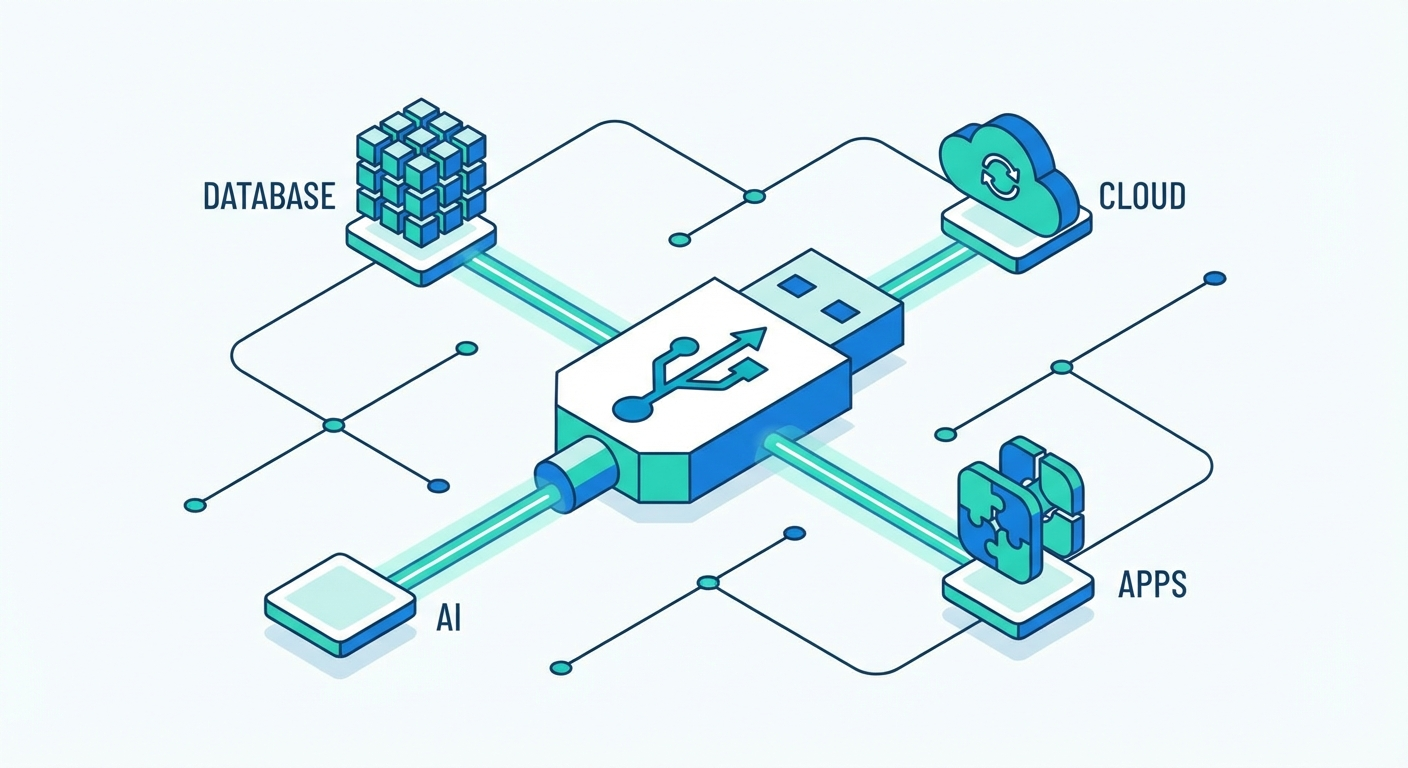
Here's a problem you might not know exists: every AI tool needs custom connections to every data source. Want your AI to access Salesforce? Custom integration. Google Drive? Another one. Your internal database? You get the idea.
Model Context Protocol (MCP) solves this.
Think of MCP like USB for AI. Before USB, every device needed its own cable and port. MCP does the same thing for AI connections—one standard protocol that works everywhere.
Anthropic (the company behind Claude) open-sourced MCP in late 2024. Now, instead of building custom integrations for each AI tool, developers build one MCP connection and it works with any compatible AI system.
What This Means Practically
- Faster deployment: Connect your AI to existing systems in hours, not weeks
- Lower maintenance: One standard to support, not dozens of custom integrations
- Better security: Standardized protocols mean standardized security controls
- Vendor flexibility: Switch AI providers without rebuilding all your integrations
Major players like Block, Replit, and Sourcegraph are already adopting it.
SKILL: Teaching AI Without Programming
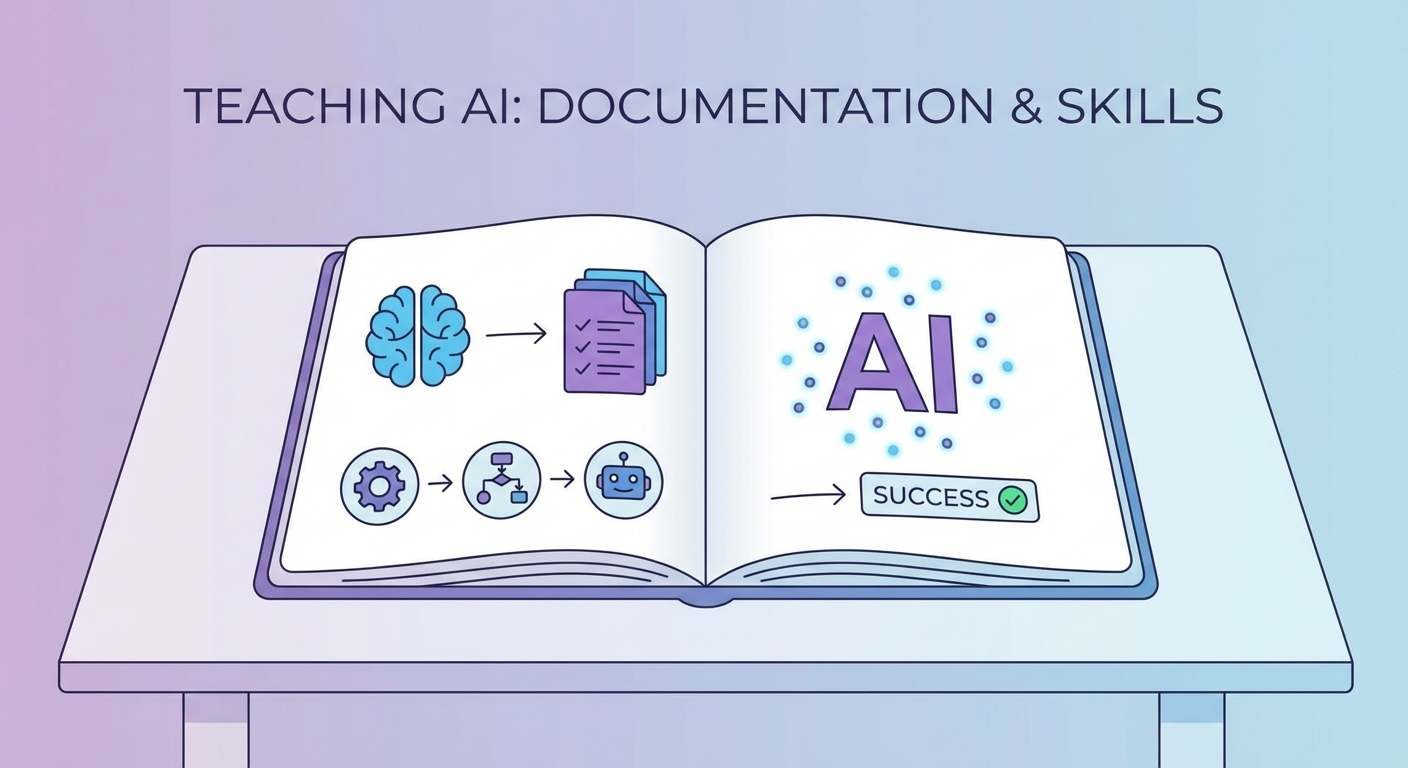
Now here's where it gets interesting for non-technical teams.
Skills (implemented as SKILL.md files in Claude's ecosystem) are essentially instruction manuals for AI. Instead of writing code, you write plain-language instructions that teach the AI how to do specific tasks.
Think of it like hiring a new employee:
- You don't reprogram their brain
- You give them documentation, procedures, and examples
- They follow the instructions and learn your way of doing things
Skills work the same way. A skill file might say:
"When reviewing a contract, always check these five clauses first. Flag anything that deviates from our standard terms. Summarize findings in this format..."
No code. No developers. Just clear instructions that any domain expert can write.
Skills vs. Full AI Agents: The Trade-off
Here's the honest comparison:
| Capability | Skills | Full AI Agents |
|---|---|---|
| Setup complexity | Low (write instructions) | High (engineering required) |
| Flexibility | Follows defined patterns | Adapts dynamically |
| Control | Predictable, auditable | Harder to predict |
| Cost | Lower | Higher |
| Best for | Repeatable processes | Novel situations |
Skills don't replace agents—they simplify them.
A full AI agent needs to figure out what to do and how to do it. Skills pre-answer the "how," so the agent focuses on "what." This makes AI more predictable, cheaper to run, and easier to trust.
How These Pieces Fit Together
Picture this setup for a real business scenario:
- MCP connects your AI to external tools such as Salesforce, PayPal etc.
- Skills teach the AI your specific processes: how you qualify leads, what your email templates look like, which documents need review
- The AI agent orchestrates everything—deciding when to pull CRM data, when to send emails, when to flag items for human review
MCP is the plumbing. Skills are the playbook. The agent is the player.
The Bottom Line for Decision Makers
Don't get distracted by the hype. Focus on this:
- Start with workflows, not agents. Most business processes don't need full autonomy. They need automation of predictable steps. Skills + basic AI covers 80% of use cases.
- Demand MCP compatibility. If your AI vendor doesn't support MCP, you're signing up for integration headaches. It's becoming the industry standard—insist on it.
- Skills are a business function, not just IT. The people who know your processes best should be writing the skills. That's domain experts, not developers.
- Full agents are the exception, not the rule. Use autonomous agents for genuinely unpredictable work—complex research, novel problem-solving, creative tasks. For everything else, simpler is better.
What's Next
The AI landscape is shifting from "impressive demos" to "boring infrastructure." MCP, Skills, and agent architectures are part of that maturation.
The companies winning with AI in 2025 aren't the ones with the fanciest models. They're the ones connecting AI to their actual data (MCP), teaching it their specific processes (Skills), and giving it room to act (agents) only where it makes sense.
That's not magic. That's engineering.
If you're navigating the agent landscape and want practical guidance, book a Free AI Assessment today.